When I first started going through the early looks, hands-on demos, and leaked firmware footage of the Galaxy S26 Ultra, one thing became very clear to me very quickly Samsung isn’t trying to shock us with radical changes this year. Instead, they’re doing something much more interesting. They’re refining, tightening, and quietly introducing features that actually change how you use your phone in everyday life.
After carefully watching multiple hands-on videos, firmware demos, and early confirmations, I feel like I’ve already spent time with this phone not physically, but enough to understand Samsung’s mindset with the S26 Ultra. And honestly, this feels like one of those devices that doesn’t scream innovation at first glance, but slowly wins you over once you understand what it’s really doing differently.
Let me walk you through everything, exactly as I experienced it.
First Impressions: Familiar, But Smarter
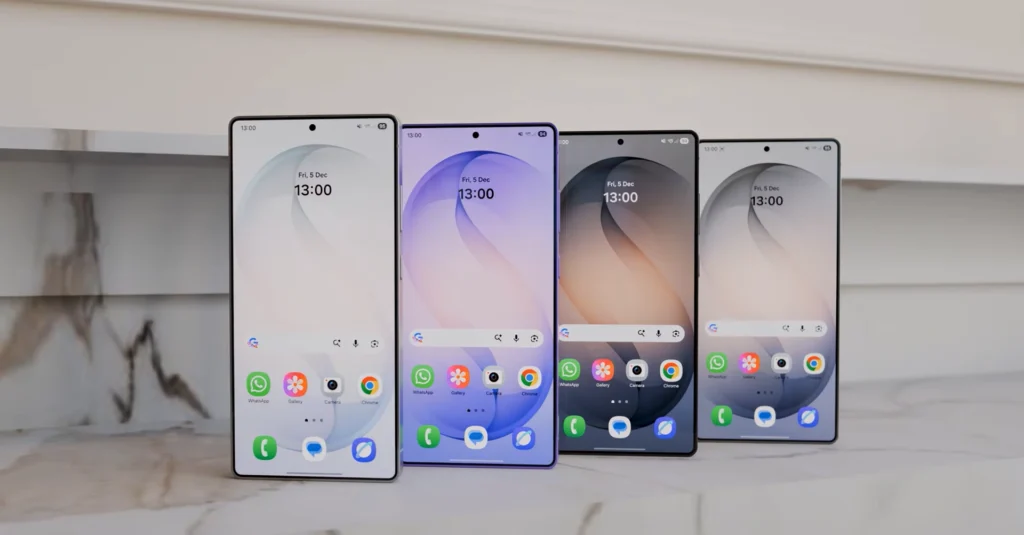
At first glance, the Galaxy S26 Ultra doesn’t look like a dramatic departure from previous Ultra models. If you’ve seen the S25 Ultra, this will feel familiar. But once I paid closer attention, subtle refinements started to stand out.
The corners are more rounded this time, and the frame edges look softer. This might sound minor, but from the hands-on footage, it clearly improves how the phone sits in the hand. The Ultra line has always been powerful but slightly boxy, and Samsung seems to be easing that discomfort without losing the premium feel.
One thing that immediately caught my eye was the punch-hole selfie camera. It’s noticeably larger than before. From a pure design perspective, I won’t lie it initially looks like a step backward. But Samsung didn’t do this randomly. There’s a practical reason behind it, and once I understood that, it made a lot more sense.
Design and Build Quality: Subtle Changes That Matter
The larger punch-hole camera exists because Samsung has widened the selfie camera’s field of view. We’re going from 80 degrees to 85 degrees, which means more coverage when taking selfies or video calls. That extra coverage requires more space, and that’s why the cutout had to grow.
Around the display, the bezels appear slightly thinner than before, and the overall symmetry looks cleaner. The softened edges and more rounded corners also extend to the S Pen clicker end, which now has a curved finish. It’s a small detail, but it adds to the overall comfort.
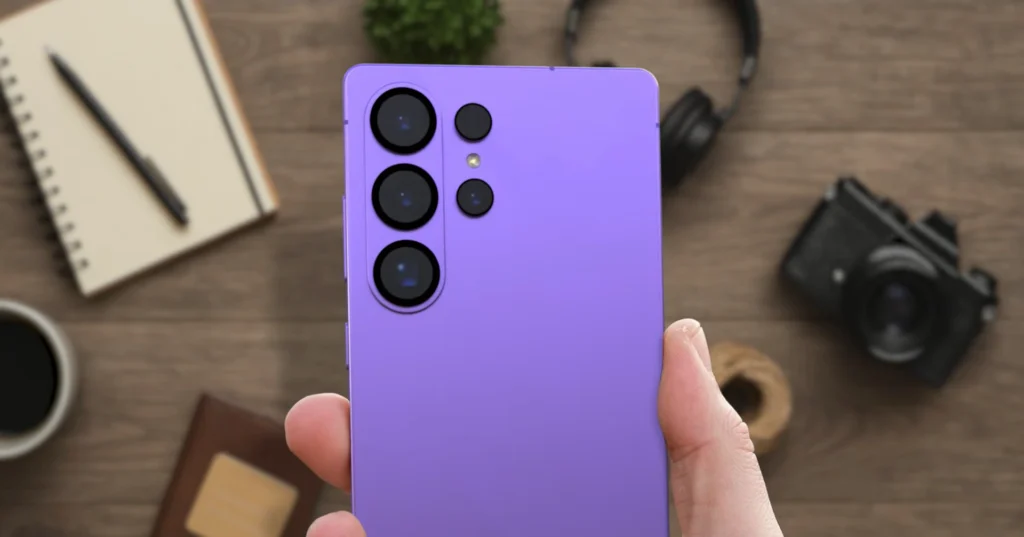
Color-wise, the unit shown in the leaks appears in a silver finish, with purple and black options also expected. While exact shades may differ at launch, the design language feels refined rather than flashy.
Samsung clearly focused on ergonomics here making a large phone feel just a bit easier to live with every day.
The Display: Privacy Changes Everything
This is where the Galaxy S26 Ultra truly separates itself from every other smartphone out there.
Samsung’s new AI-powered privacy display is, without exaggeration, one of the most interesting phone display features I’ve seen in years. And the best part? It’s not just a gimmick.
From the firmware demos and official demonstrations, the way it works is simple but incredibly effective. When you’re looking at the phone straight on, the screen looks completely normal. Colors, brightness, and clarity remain unchanged. But the moment someone views your screen from the side, top, or bottom, the display dims dramatically.
People next to you simply can’t see what you’re doing.
What I really like is that this isn’t a permanent privacy filter like older privacy screens. Those always ruined brightness and touch responsiveness. This one is software-controlled. You can turn it on from settings, toggle it from quick settings, or even set conditions for when it activates automatically.
Samsung specifically designed it for sensitive apps like online banking, but you’re not limited to just that.
Even more interesting is that this feature relies on a new Flex Magic OLED panel, making it exclusive to the Galaxy S26 Ultra. No older Ultra models get it. Not the S26 or S26 Plus either. This alone makes the Ultra feel genuinely special.
It may not be the brightest display on paper, but it could end up being the smartest display on any phone.
Performance and Hardware: Power Where It Counts
Under the hood, Samsung is clearly leaning heavily into AI and on-device processing this year.
The Galaxy S26 Ultra is expected to run the Snapdragon 8 Elite Gen 5 in all regions, which already puts it in a strong position. What really stood out to me is Samsung’s push to move more AI tasks directly onto the device rather than relying on the cloud.
That means faster responses, better privacy, and smoother performance across photography, video, voice recognition, and general system behavior.
Even Samsung’s Exynos 2600 chip used in other S26 models comes with a redesigned NPU, showing how serious Samsung is about AI this year. But the Ultra clearly gets the best of the best.
From everything shown, this phone isn’t just about raw speed. It’s about smarter performance that actually improves how features work in real life.
Camera Experience: More Control, Better Video
Camera-wise, Samsung didn’t just increase numbers for the sake of marketing. What impressed me more were the new camera assist features buried inside One UI 8.5.
You’ll be able to adjust how soft video footage looks, similar to photo controls. Even more importantly, you can fine-tune autofocus speed and sensitivity. This kind of control is something video creators will really appreciate.
Combined with a wider aperture on the main camera and a new lens coating designed to reduce flare, low-light performance especially for video should see noticeable improvements.
On the front, the 12MP selfie camera benefits directly from that wider field of view we talked about earlier, making group selfies and video calls more practical.
Samsung isn’t reinventing mobile photography here. They’re polishing it.
Battery Life and Charging: Finally Catching Up
Charging is another area where Samsung made meaningful upgrades.
The Galaxy S26 Ultra supports 60W fast wired charging, which is a big step forward. Wireless charging has also been improved, with support for 25W wireless charging across the lineup.
What really caught my attention is native magnetic accessory support. From leaked images and hands-on footage, you can attach magnetic chargers and accessories directly to the back of the phone no third-party case required.
Samsung is even preparing its own official magnetic wireless charger, which snaps on similarly to Apple’s approach. This opens the door to a whole ecosystem of magnetic accessories going forward.
Battery capacity figures have been debated, but multiple sources suggest Samsung is sticking with 5,000 mAh, which seems to be the most likely outcome.
Software and AI: Bixby’s Biggest Comeback Attempt
Now let’s talk about Bixby because this is easily the biggest software shift on the S26 Ultra.
Samsung is completely redesigning Bixby, both visually and functionally. The new interface looks modern, with a chat-based layout similar to other AI assistants. Conversations are stored neatly, and interaction feels more natural than before.
What’s really happening behind the scenes is even more important. Samsung is partnering with Perplexity AI to power Bixby’s search and information retrieval. There are even hints that you’ll be able to activate it using “Hey Plex.”
From what I’ve seen, Bixby still sounds a bit robotic and doesn’t yet match Gemini or ChatGPT in advanced features like screen viewing or image uploads. But Samsung’s real advantage is system-level integration.
You can ask things like whether battery protection is turned on, and Bixby can answer directly. That’s something third-party assistants can’t fully replicate.
For the first time, Bixby doesn’t feel embarrassing. It feels… promising.
Pricing and Launch: Surprisingly Good News
One of the best surprises is pricing.
Despite rising component costs, especially memory, Samsung is reportedly keeping prices the same as last year. For the Galaxy S26 Ultra, that means around $1,300.
Samsung is choosing to absorb the cost increase rather than pass it on to consumers and that’s honestly refreshing to see.
The official launch is expected on February 25, 2026, in San Francisco, with devices going on sale a couple of weeks later in March.
Strengths and Weaknesses
From everything I’ve seen, the Galaxy S26 Ultra’s biggest strengths are clear. The privacy display is genuinely unique. AI features are smarter and more integrated. Charging and magnetic accessories finally catch up with expectations.
On the flip side, if you’re using an S25 Ultra, this probably isn’t a must-upgrade. The changes are meaningful, but they’re evolutionary rather than revolutionary.
Who This Phone Is Really For
If you’re coming from an S23 Ultra, S24 Ultra, or an even older Galaxy flagship, the S26 Ultra makes a lot of sense. You’re getting real improvements in privacy, usability, AI, and charging without paying more.
If you care about on-device AI, privacy, and a refined Ultra experience, this phone feels built exactly for you.
Final Thoughts: Quietly One of Samsung’s Smartest Phones
The Galaxy S26 Ultra isn’t loud about its upgrades, and that’s exactly why I like it.
Samsung focused on features that actually affect daily use privacy, comfort, charging, and smarter software. The new privacy display alone makes this phone stand out in a crowded market.
This isn’t a flashy upgrade cycle. It’s a thoughtful one. And sometimes, that’s exactly what a flagship should be.